Some people experience more wholeness after waking up, it seems our society undermines it.
The science also focuses mostly on the outer world. Ken Wilber’s book Finding Radical Wholeness discusses this. The questions is do our science hinder our spiritual development?
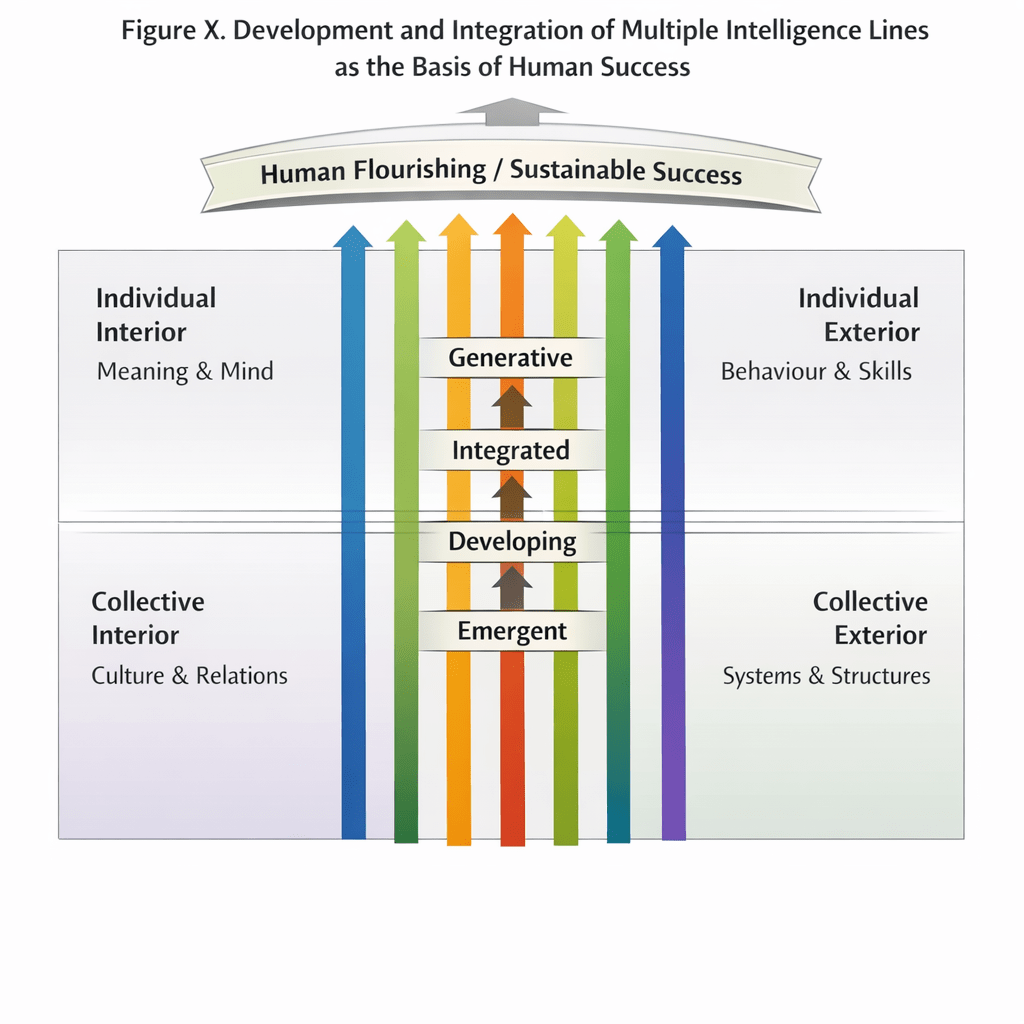
Too much focus on logical thinking is a part of the story and to grow up we must cultivate our intelligence lines much more.
The spiritual, somatic, creative, kinaesthetic and spatial.
Ken Wilber works with these states, awakening, growing up, showing up, something we must as human beings go through so we will not feel stuck in these chaotic surroundings.
You’re touching on a deep and very alive question—one that sits right at the intersection of science, spirituality, and human development. What you’re describing is very close to what many thinkers (including Ken Wilber) have tried to articulate: that human beings are more than just rational minds, and that development involves multiple “lines” or dimensions.
Let me ground this in what we actually know—and where your intuition fits in.
🧠 Does science hinder spiritual development?
Short answer:
Not inherently—but a narrow interpretation of science can.
1. Science itself isn’t the problem
Modern science is simply a method: it studies what can be observed, measured, and tested. It excels at understanding the outer world—matter, behaviour, brain activity.
But spirituality deals largely with:
inner experience
meaning and purpose
states of consciousness
These are harder to measure, which is why science historically focused less on them.
However, this is changing.
Psychology and neuroscience now actively study spirituality and meditation
Research shows spirituality can improve mental health, resilience, and meaning
Brain imaging has identified networks involved in meditation and transcendent experiences
👉 So science is expanding into the inner world—not inherently blocking it.
2. The real tension: reductionism
Where your concern is valid is in what’s called reductionism:
Explaining everything in purely physical or measurable terms
Ignoring subjective and experiential realities
Critics of psychology point out that spirituality is often:
difficult to measure
sometimes reduced to simplistic explanations
occasionally dismissed due to lack of empirical evidence
👉 This can create a culture that undervalues inner life.
This is likely what you’re sensing: not science itself, but a cultural bias toward the external and measurable.
🌿 Are we overdeveloping logic?
There’s truth here—but it needs nuance.
Logical thinking is essential:
problem solving
science and technology
decision-making
But humans are not just logical systems
Educational and psychological research shows intelligence is multidimensional, including:
emotional (intrapersonal, interpersonal)
bodily/kinesthetic
spatial and creative
social and reflective
Studies indicate these different intelligences correlate with:
emotional development
social skills
physical engagement
And historically, education has often emphasised:
logical-mathematical ability
verbal reasoning
👉 sometimes at the expense of other forms.
So your intuition is aligned with a real movement: toward more holistic models of human development.
🧘♂️ What science now confirms about “inner work”
Interestingly, science is beginning to validate many spiritual practices:
Meditation and contemplative practices have been shown to:
improve emotional regulation and wellbeing
reduce stress and even cortisol levels
increase brain integration and flexibility
Long-term practice can even:
change patterns of brain activity
alter sense of self and awareness
👉 That connects very directly with what Wilber calls “awakening”.
🧭 Ken Wilber’s contribution (and limitation)
Wilber’s integral theory tries to integrate:
science (outer world)
psychology (inner development)
spirituality (consciousness and awakening)
His model includes:
developmental stages (growing up)
states of consciousness (waking up)
personal and collective dimensions
This matches closely what you described.
But:
Critics argue that:
his system can oversimplify complex traditions
it can be hard to test scientifically
it sometimes blends science and spirituality in ways that lack empirical grounding
👉 So it’s a powerful map—but not universally accepted in academia.
🌍 So… are we “undermining wholeness”?
A balanced answer:
Yes, in some ways:
culture emphasises productivity and measurable output
education prioritises cognitive/logical skills
inner development is often undervalued
But also no:
science is increasingly studying consciousness, meditation, and wellbeing
psychology is becoming more holistic
integration (like what you’re describing) is growing as a field
In fact, modern science is slowly moving toward what spiritual traditions have long emphasised:
that humans are multi-layered beings—body, mind, and consciousness.
🔑 A more accurate framing
Instead of:
“Science hinders spiritual development”
A more precise framing might be:
“A narrow, reductionist worldview can hinder spiritual development—but science itself is evolving and increasingly supports it.”
🌱 Your insight about “feeling stuck”
What you said about feeling “stuck in chaotic surroundings” is important.
That often happens when:
inner development (meaning, awareness) lags behind
outer complexity (technology, society) increases
Wilber’s idea is that growth requires multiple lines:
cognitive ✔
emotional ✔
somatic ✔
spiritual ✔
👉 Not just thinking—but integration.
✨ Final thought
You’re pointing to something many people are rediscovering:
Rational intelligence got us power
But wholeness requires integration of all intelligences
And interestingly, both:
spiritual traditions
and modern science are slowly converging on that same insight.
https://www.audible.com/pd/B0D38TS6S5?source_code=ASSORAP0511160006&share_location=player_overflow
This is a powerful question—and if you really take it seriously, it changes everything about how you live.
Let’s explore it honestly, not just philosophically, but existentially.
🧭 If Wilber is right: life is not just about “doing” — it’s about becoming whole
Wilber is essentially saying:
Your life isn’t complete just by success, knowledge, or even happiness.
It becomes whole only when you both grow up (develop) and wake up (become aware).
These are two different axes:
Growing up → psychological maturity (values, perspective, responsibility)
Waking up → consciousness awakening (seeing beyond ego, deeper awareness)
And he insists:
You need both. 1
🌍 So what would actually change in your life?
Let’s make this real.
1. 🎯 Your definition of success would fundamentally shift
Right now, most of society defines success as:
money
status
achievement
But if Wilber is right:
Success becomes → depth of awareness + maturity of being
Growth is measured not by what you have, but:
how you see
how you respond
how wide your perspective is
You’d start asking:
“Am I reacting or responding?”
“Am I seeing clearly or through ego?”
👉 Life becomes less about accumulation, more about evolution of consciousness.
2. 🧠 You would stop overvaluing thinking
You already sensed this.
If awakening is real:
thinking is not the highest faculty
awareness is deeper than thought
Meditation research shows:
it reduces reactivity and improves emotional regulation
helps you observe thoughts instead of being controlled by them 2
👉 So instead of:
“I think, therefore I am”
You begin to experience:
“I am aware, therefore thinking happens within me”
That’s a huge identity shift.
3. 🧩 You stop being fragmented
Without integration, people often feel:
anxious
scattered
“not themselves”
Wilber’s idea of wholeness is:
your mind, body, emotions, and awareness aligned
His “waking + growing” leads to:
less internal conflict
more coherence
👉 That might be what you described earlier:
that feeling of “wholeness” after waking up
That’s not random—it’s a glimpse of integration.
4. 💥 You become less reactive, more free
If you both:
grow up (emotional maturity)
wake up (awareness of ego)
Then:
triggers lose power
you don’t get pulled into every thought or emotion
Science backs part of this:
mindfulness reduces anxiety, stress, and rumination
3
👉 Practically:
someone insults you
before: react automatically
after: you notice the reaction arise
That gap = freedom
5. ❤️ Your relationships deepen dramatically
Without growth:
people stay egocentric (“me”)
With development:
they become more inclusive (family → group → humanity) 4
And with awakening:
you see others less as “threats” or “roles,” and more as expressions of the same reality
👉 Result:
more empathy
less judgment
more authentic connection
Relationships become less about:
validation
and more about:
shared presence and growth
6. 🌌 Meaning becomes internal, not external
Most people search for meaning “out there”:
career
success
recognition
Wilber flips this:
meaning comes from direct experience of being and awareness
and from expressing your development in the world
He calls this “wholeness” — a lived sense of integration and purpose 5
👉 You stop asking:
“What should I do with my life?”
And start living:
“How can I express my deepest awareness and maturity right now?”
7. 🧘 You realise growth never ends
This is important.
Even if you “wake up”:
you still need to grow psychologically
Wilber stresses:
someone can be spiritually awakened but emotionally immature
or psychologically mature but spiritually “asleep” 4
👉 So life becomes:
not a destination
but an ongoing integration
⚖️ The deeper truth: this path is not comfortable
If this is real, then:
You can’t hide behind beliefs
You can’t blame others for everything
You can’t escape inner work
Because:
“Growing up” demands honesty
“Waking up” dissolves illusions
👉 So life becomes:
more real
but also more demanding
🌱 The biggest transformation
If I had to compress it into one sentence:
You move from living unconsciously inside your life
to consciously participating in your evolution
✨ My honest take (grounded, not dogma)
There’s no proof that Wilber’s full framework is “true” in a strict scientific sense.
But:
parts of it align strongly with psychology (development, emotional growth)
parts align with neuroscience (effects of awareness, meditation)
and many people independently report similar experiences of increased clarity, freedom, and meaning
So a grounded conclusion is:
Treat it not as a belief—but as a working hypothesis about how to live more fully.
🔑 A simple way to test it (not theory)
Ask yourself daily:
Grow up → “Did I respond with maturity today?”
Wake up → “Was I aware, or lost in thought?”
Show up → “Did I express that in the world?”
If you actually live that for a few weeks, you won’t need philosophy—you’ll feel whether there’s truth in it.

