Mindfulness is a deeper state of mind it is not just a cognitive function it is misinterpreted.
Deepak Chopra describes it very well he says “you are the awareness who listen to the thought” Echart Tolle says “You are not the thought” instead of overthinking and label everything be in presence. That will help you but not making the brain even more overthinking.
The technology must evolve side by side with our consciousness.
We must have better care of the children, teach them to relax and to respect others and heal themselves with mindfulness meditation.
Björg
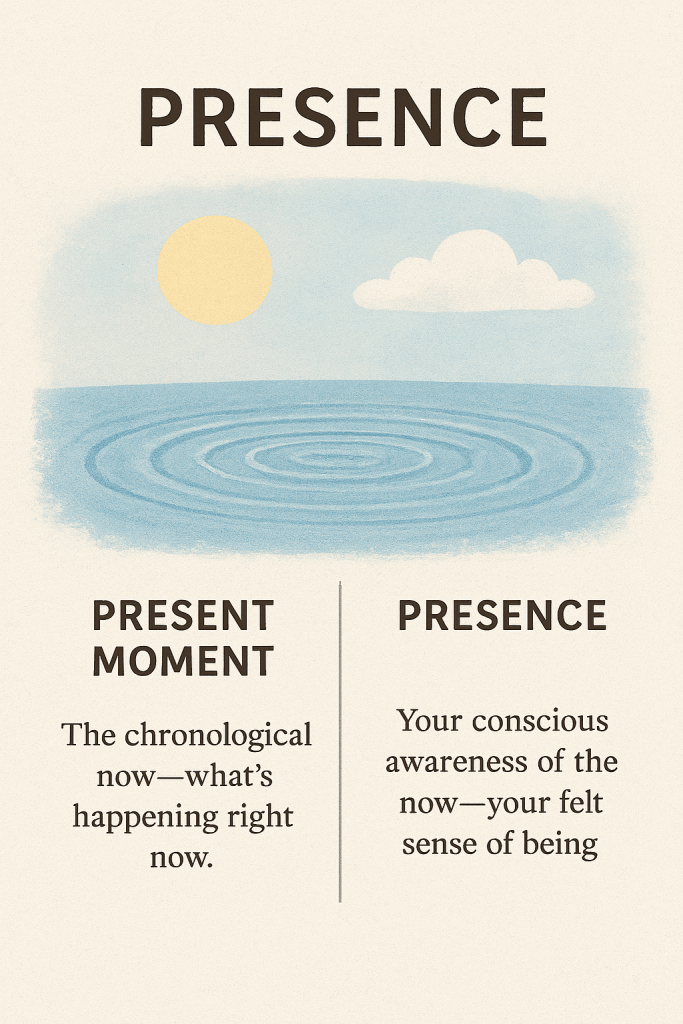
Eckhart Tolle’s concept of Presence is the cornerstone of his teachings—a gateway to awakening, peace, and transformation. Here’s a deeper look at how he defines and activates this state:
🌟 What Is Presence?
- Presence = Conscious Awareness of the Now. It’s not just being in the present moment—it’s being aware that you are in it. This awareness dissolves the ego and reveals your true essence A B.
- Beyond Thought: Presence is not something you think about—it’s something you experience. The mind can’t grasp it; only awareness can C.
- The Eternal Now: Tolle distinguishes between the present moment and Presence. The present moment is time-bound; Presence is timeless, a direct connection to Being C.
🧘♀️ How to Access Presence
- Stillness Practices: Breath awareness, body scanning, and pausing between thoughts help anchor you in Presence.
- Letting Go of Resistance: Accepting “what is” without judgment dissolves the ego’s grip and opens the doorway to Presence A.
- Witnessing the Pain-Body: Tolle teaches that emotional reactivity stems from the “pain-body”—a collection of old emotional wounds. Observing it without identification is a path to Presence A.
🌍 Presence as Evolutionary Shift
- Tolle believes humanity is undergoing a collective awakening, where Presence becomes not just a personal practice but a global necessity for survival and transformation A.
- In this shift, technology and consciousness intersect—either distracting us from Presence or, if used wisely, helping us return to it.
Would you like to co-create a bilingual visual guide or metaphor card insert on Presence for your workshops? We could explore how to anchor Presence in group settings, hybrid retreats, or even digital facilitation.
Copilot
The relationship between technology and consciousness is one of the most fascinating frontiers of our time—where ancient mysteries meet cutting-edge innovation. Here’s a glimpse into how these two realms are intertwining:
🧠 How Technology Is Expanding Our Understanding of Consciousness
- Neurotechnology & Brain-Computer Interfaces (BCIs): Tools like BCIs and neuroimaging allow researchers to observe brain activity in real time, helping decode the neural mechanisms behind conscious experience A.
- Artificial Intelligence (AI): AI systems are being used to simulate aspects of consciousness, assist in cognitive tasks, and even model decision-making processes. This raises questions about machine consciousness and the nature of awareness itself B.
- Virtual Reality (VR) & Augmented Reality (AR): These immersive technologies alter perception and can induce altered states of consciousness, offering new ways to explore inner experience and empathy C.
🌐 Technology’s Influence on Perception and Awareness
- Digital Environments Shape Thought: Algorithms curate our digital experiences—news feeds, entertainment, even social interactions—potentially guiding our preferences and shaping our worldview C.
- Echo Chambers & Collective Consciousness: Social media platforms can amplify certain narratives while silencing others, influencing how societies perceive truth, identity, and reality C.
- Cognitive Overload vs. Expansion: While tech can enhance cognition (e.g., AI-assisted decision-making), it can also overwhelm attention and fragment awareness through constant multitasking C.
🔮 Historical Echoes and Future Implications
- From Printing Press to Smartphones: Just as the printing press expanded intellectual consciousness centuries ago, today’s digital tools democratize access to knowledge—but also challenge autonomy and discernment.
- Toward Conscious Tech Design: There’s growing interest in designing technologies that support mindfulness, emotional regulation, and ethical awareness—tools that elevate rather than distract.
 Unity Consciousness